
 Image 1 of 3
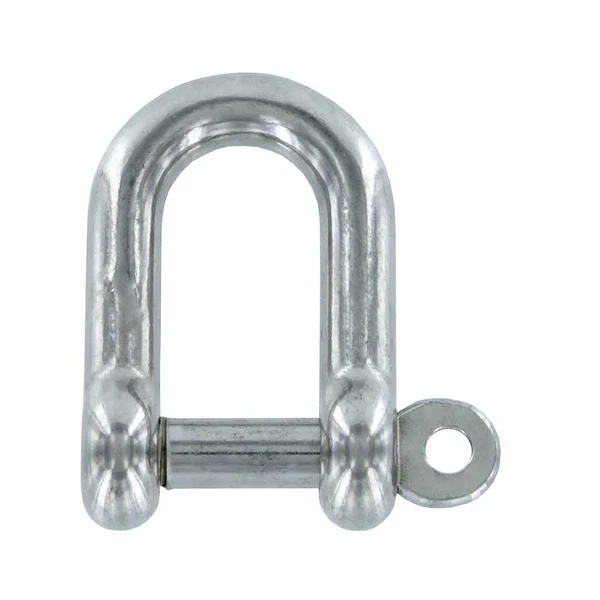 Image 2 of 3
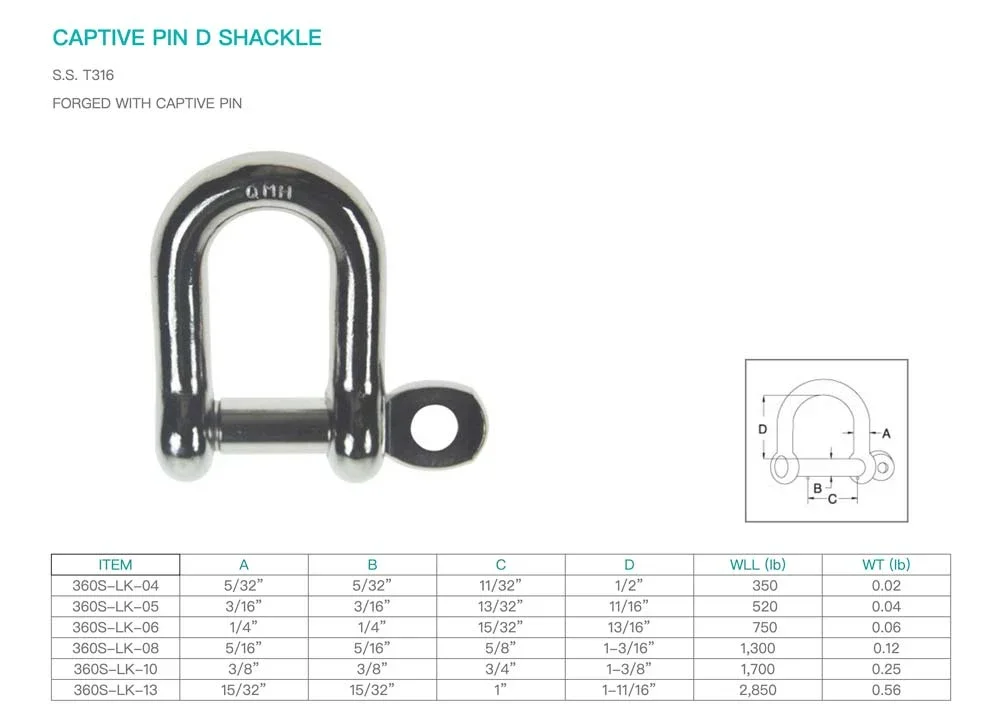 Image 3 of 3
Our captive pin D shackles are drop-forged with a captive pin. The captive pin is "captured" on the shackle, so it is connected to the body at all times. This captive pin makes for easy application, and you never have to worry about the pin falling into the water. Our D shackles are made with type 316 stainless steel. Type 316 stainless steel has an additional element called molybdenum, which adds to its durability and corrosion-resistant properties as opposed to the more common type 304 stainless steel.
Spec Sheet
⚠️Warning: Shackles
Never exceed the maximum working load limit/load capacity. Doing so can result in product failure leading to injury or death.
Do not replace the shackle pin with a bolt or unidentified pins.
Do not pull the shackle at an angle.
If the pin can roll and unscrew, do not use screw pin shackles or allow pins to be in contact with moving parts.
Round pin shackles restrained only by a cotter pin should not be used for overhead lifting.
Do not use force to get shackles into position, such as hammering or wedging.
When using slings with more than one leg, do not exceed a 120-degree angle.
Inspect before each use. Do not use shackles with bent pins, deformed bodies, or other signs of damage.
Our captive pin D shackles are drop-forged with a captive pin. The captive pin is "captured" on the shackle, so it is connected to the body at all times. This captive pin makes for easy application, and you never have to worry about the pin falling into the water. Our D shackles are made with type 316 stainless steel. Type 316 stainless steel has an additional element called molybdenum, which adds to its durability and corrosion-resistant properties as opposed to the more common type 304 stainless steel.
Spec Sheet
⚠️Warning: Shackles
Never exceed the maximum working load limit/load capacity. Doing so can result in product failure leading to injury or death.
Do not replace the shackle pin with a bolt or unidentified pins.
Do not pull the shackle at an angle.
If the pin can roll and unscrew, do not use screw pin shackles or allow pins to be in contact with moving parts.
Round pin shackles restrained only by a cotter pin should not be used for overhead lifting.
Do not use force to get shackles into position, such as hammering or wedging.
When using slings with more than one leg, do not exceed a 120-degree angle.
Inspect before each use. Do not use shackles with bent pins, deformed bodies, or other signs of damage.